

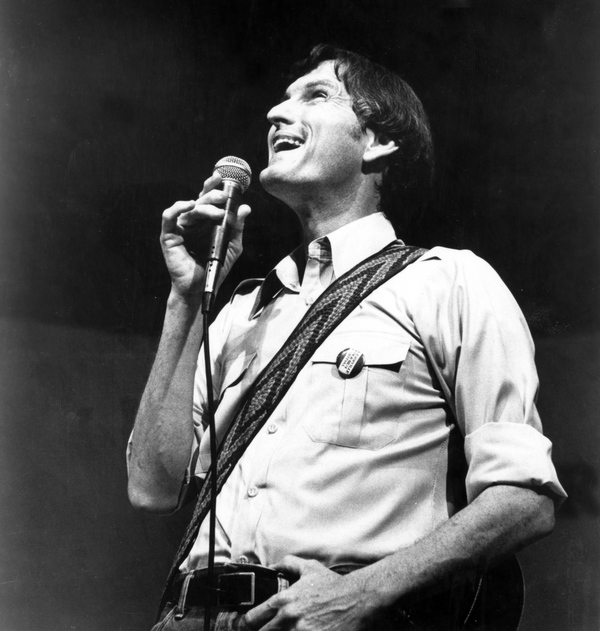
If you’ve never heard – or even heard of – Gamble Rogers, it can be tricky to condense his performance style into a snappy phrase. On his tombstone, Rogers is described as a guitarist, humorist, and “folkteller” who “carried Florida’s magic and myth across the land.” Folk musician Mike Agranoff explained Rogers as “sort of like a cross between Chet Atkins, Mark Twain, and Merriam-Webster,” as he was a skilled fingerpicker, a satirist, and a wordsmith.
Once asked on a radio show to categorize himself, Rogers modestly demurred.
“Well, I ain’t nothing more than a whiskey salesman,” he said, according to Bruce Horovitz’s 2018 biography, Gamble Rogers: A Troubadour’s Life. “I play in these dives and the more whiskey they drink, the more money I make.”
He surely was more than that. A beloved folk singer and storyteller dubbed “The Florida Troubadour,” Rogers also is a Carnegie hero for his fatal attempt to save a Canadian tourist from drowning 35 years ago.
Frequently on the road although his career fell short of major commercial exposure, Rogers’ schedule was clear on Oct. 10, 1991, when he was camping with his wife, Nancy, and some friends at a state park in Flagler Beach in his native Florida. He could have been booked for a music festival that coming weekend, but the arrangements fell through, Horovitz reported.
As it was, Rogers, 54, of St. Augustine, was nearby when a strong current in the Atlantic Ocean pulled a 48-year-old man away from the beach. The waves were about 6 feet high and there were no lifeguards stationed in the area. Rogers waded into the water with an inflated air mattress, to which he and the tourist’s son-in-law held as they kicked out toward the man. When they were within about 10 feet of him, a wave submerged the man, who then resurfaced about 50 feet away. As Rogers, who was tiring, and the son-in-law attempted to kick back toward shore, another wave swamped them and they fell off the mattress. While the son-in-law crawled back atop the mattress and was able to return to the beach, Rogers submerged and did not resurface.
The perilous conditions also thwarted others’ efforts to rescue the tourist, spurring a fire chief to later tell a newspaper reporter, “We came within an inch of having six drownings.” Using rescue equipment, first-responders recovered Rogers about 300 feet from shore and the tourist twice that distance.
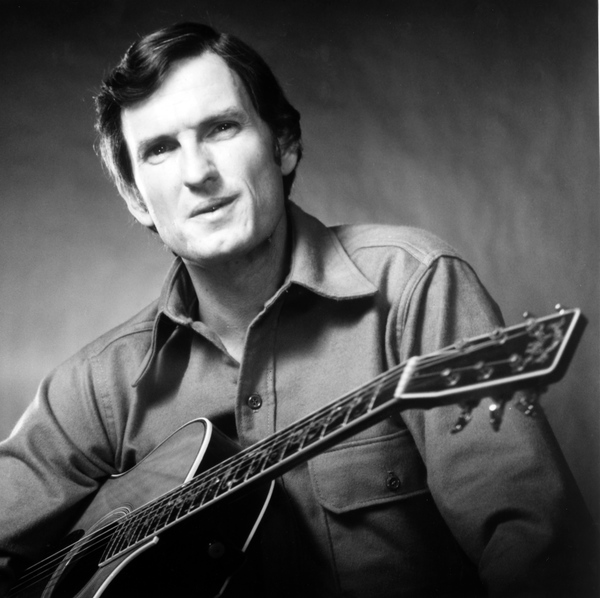
One of the most impressive parts of Rogers’ choice that day is that any rescue try would have been daunting for him.
“Growing up with him and knowing how generous he was, I’m not surprised he was the first to respond in that time of need,” his brother, Jack Rogers, told The Florida Times-Union for a Sept. 25, 1992, story announcing the posthumous Carnegie Medal award. “He had an arthritic condition that essentially fused his spine as a teenager, so it was dangerous for him to swim at all under those circumstances, but he never thought of his own limitations.”
Florida dignitaries honored him by renaming the park Gamble Rogers Memorial State Recreation Area at Flagler Beach. A middle school in St. Augustine also is named after Rogers.
The son of a renowned architect, Rogers, born James Gamble Rogers IV, opted to pursue a folk music career instead of joining the family business. Rogers populated his albums and performances with anecdotes of the people, places, and things of “Oklawaha County,” a concocted rural region of northern Florida that purposefully misspelled its muse, the Ocklawaha River. Some described his stories – sung or spun – as Southern Gothic, and his monologue cadence was comparable to that of a preacher.
In a dose of irony, Rogers is featured in Heartworn Highways, a cult classic documentary highlighting the “outlaw country” movement, in which whiskey is as much of a character as the performers. Rogers sings his original, “Black Label Blues,” calling out for Jack Daniel’s whiskey, although Horvitz disclosed in his book that Rogers – despite the whiskey salesman quip –
wasn’t a drinker.
During his career, Rogers played with influential musicians like Pete Seeger and Doc Watson and inspired others like Jimmy Buffett, a friend who dedicated his 1994 Fruitcakes album to him. To this day, performers pay tribute. The 32nd annual Gamble Rogers Folk Festival is scheduled for an April weekend in his home county. (That’s St. Johns County, not Oklawaha.)
Perhaps there is no better synopsis of Rogers’ stage presence than that offered by an ordinary fan, identified as Jacquie Bennett of Boca Raton, in a letter to the Boca Raton News after the rescue attempt.
“On many occasions, I had the privilege of sitting in the audience while Gamble lovingly stroked the strings of his guitar and told amusing stories that endeared him to every person in the room,” Bennett wrote. “When a joke is told in a long-winded way, the listener often gets antsy. Gamble had a way of making that wind feel like a ride on the wings of Pegasus; you clung with anticipation for the next thrilling word.”
— Chris Foreman, assistant investigations manager