

On the morning of April 13, 1992, Aneeta A. Campbell, 25, and 26-year-old Heather Ann Stewart, from Bon Accord, Alberta, were working at a local private zoo, where they were assigned to enter the enclosure of an 8-year-old male jaguar.
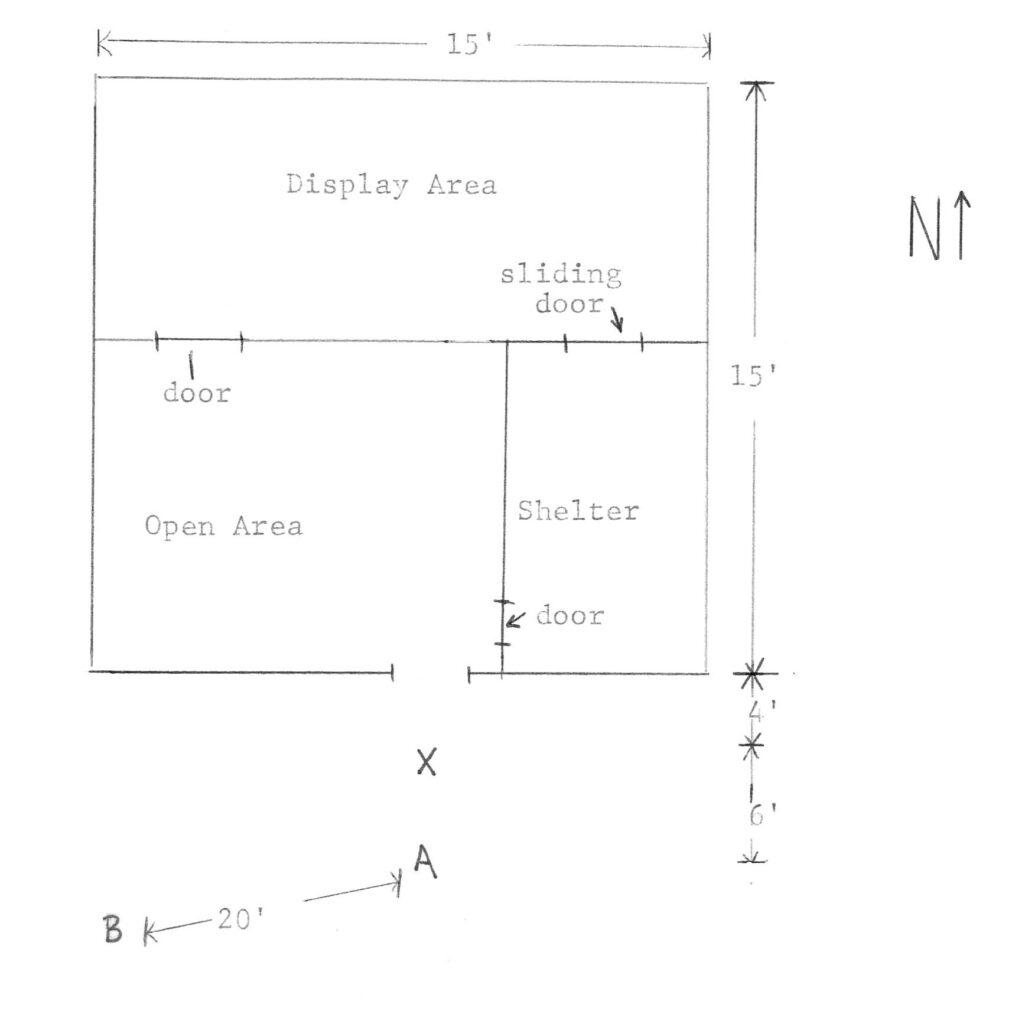
The big cat was confined to a shelter within a chain-link enclosure while the women entered the pen to leave food and water. The shelter had a sliding door that opened into the display area and a hinged door that opened into the adjoining enclosure. The hinged door was normally secured with a U-shaped clip, which was removed only when the shelter was being cleaned.
According to the Royal Canadian Mounted Police, the jaguar had been placed on a diet of dry pet food instead of its usual diet of raw meat. It was 30 to 40 pounds under its normal weight and in such poor condition that it was described as “essentially starving to death.”
Stewart, who normally cared for the zoo’s petting animals, was filling in for an absent zookeeper that day. Campbell had returned to work after an extended absence.
Stewart later stated that the jaguar had been aggressive recently because of the change in its diet, and it “always” went to the door and pushed on it with its nose during feedings.
“A lot of the animals, especially the big cats, were in really poor condition because they weren’t being fed a proper diet,” Stewart told Roberta Staley from the Edmonton Sun in a January 1993 article. “His character had changed from the first time I worked there.”
When the women arrived, the jaguar was already confined to its shelter. According to the investigation done by Hero Fund investigator Susan L. Marcy, Stewart said she believed the U-shaped clip was in place when they entered, though she did not check to see if the clip was in place with her attention focused on the base of the door which the jaguar had chewed.
Campbell told Adrienne Tanner from the Edmonton Journal in a January 1993 article that she felt like she was being stalked by the starving cat as she looked into its eyes.
“It was like looking at someone in a bar, looking away and then looking again because you’re attracted to what you’ve seen,” Campbell said. “To him, I probably looked like one of those cartoons of a big steak.”
After leaving food in the display area, the women approached the enclosure’s south gate. Stewart exited first and began speaking with a female aviary keeper while Campbell remained inside.
As Campbell passed the hinged door of the shelter, the jaguar suddenly lunged against it. Campbell realized that the U-shaped clip was missing and pushed against the door in an effort to keep the animal confined. Unable to hold it shut, she attempted to flee.
The jaguar burst through the door, pursued Campbell, and knocked her to the ground outside the enclosure. Campbell curled into a fetal position, covering her head to protect her neck. The jaguar seized her left arm in its jaws and bit down, crushing the bone.
“I was screaming. I could feel the bone crushing in my arm,” Campbell told Ian Williams and Greg Owens from the Edmonton Journal in April 1992. “(The cat) was so hungry. When he got that first taste of blood, he kept on wanting to taste more.”
Campbell screamed for help and caught the attention of the aviary keeper. The aviary keeper ran to a nearby parked truck and started it, hoping that the sound of the engine would frighten the jaguar to release its hold of Campbell, but it did not deter the jaguar’s attack.
Stewart saw her friend in mortal danger and immediately ran over to Campbell. She shouted at the Jaguar before hitting the cat with a plastic bucket, but its handle broke.
Determined to get the jaguar away from Campbell, Stewart kicked the jaguar and pulled on its fur and tail. The jaguar momentarily released its grip on Campbell but then grasped her arm again, dragging her toward the pen.
With the attack continuing, Stewart remembered a 10-pound sledgehammer in the nearby truck. She ran to retrieve it, then returned to Campbell, who was still being dragged by the jaguar.
Stewart swung the hammer repeatedly, striking the animal in its rib cage and head until it finally released Campbell. The injured woman rolled away and fled toward the truck as the jaguar staggered and collapsed.
The aviary keeper helped get Campbell inside the truck to safety and Stewart followed.
Once all three women were safely inside, they drove to a nearby concession stand and called for an ambulance. Stewart and the aviary keeper then went to the zoo manager’s nearby residence to alert him to the attack. The manager returned to the enclosure and shot the jaguar dead.
Campbell was hospitalized for five days with a broken left arm and lacerations to her arm, leg, and chest. Her wounds required sutures, and she underwent a year of physical therapy. She was unable to work for 10 months. At the time of the Hero Fund’s investigation, bone fragments remained in her arm, and she continued to experience pain.
The zoo closed soon after the incident.
An autopsy confirmed the jaguar’s deteriorated condition. Dr. Byron Morden, head of the animal disease section of Agriculture Alberta, described the animal as “very thin and emaciated” in an April 1992 interview with Roland Bremner of the Edmonton Sun. Its poor condition was considered a possible factor in its aggressive behavior and attack on Campbell.
In the months following the incident, Campbell spoke openly about her gratitude for Stewart’s intervention and her belief that Stewart had saved her life.
“If she wouldn’t have been there that day or hadn’t done anything, I would have literally been cat meat,” Campbell told Adrienne Tanner of the Edmonton Journal in January 1993.
Campbell sought formal recognition for Stewart’s bravery, nominating her for both a Governor General’s award for bravery and the Carnegie Medal.
“I’m ecstatic. This is my way of paying her back,” Campbell said of the nominations.
“When somebody saves your life, you feel like you owe them something.”
Stewart, however, remained modest about her actions. According to Campbell, Stewart believed that anyone in her position would have done the same.
“She thinks any other person would have done the same things, but I’m not so sure,” Campbell said.
Beyond the nominations and public expressions of gratitude, Campbell gave Stewart something deeply personal: a cross that she had worn around her neck for years.
“I had worn a cross around my neck for years and years, and after the accident I gave it to her.”