

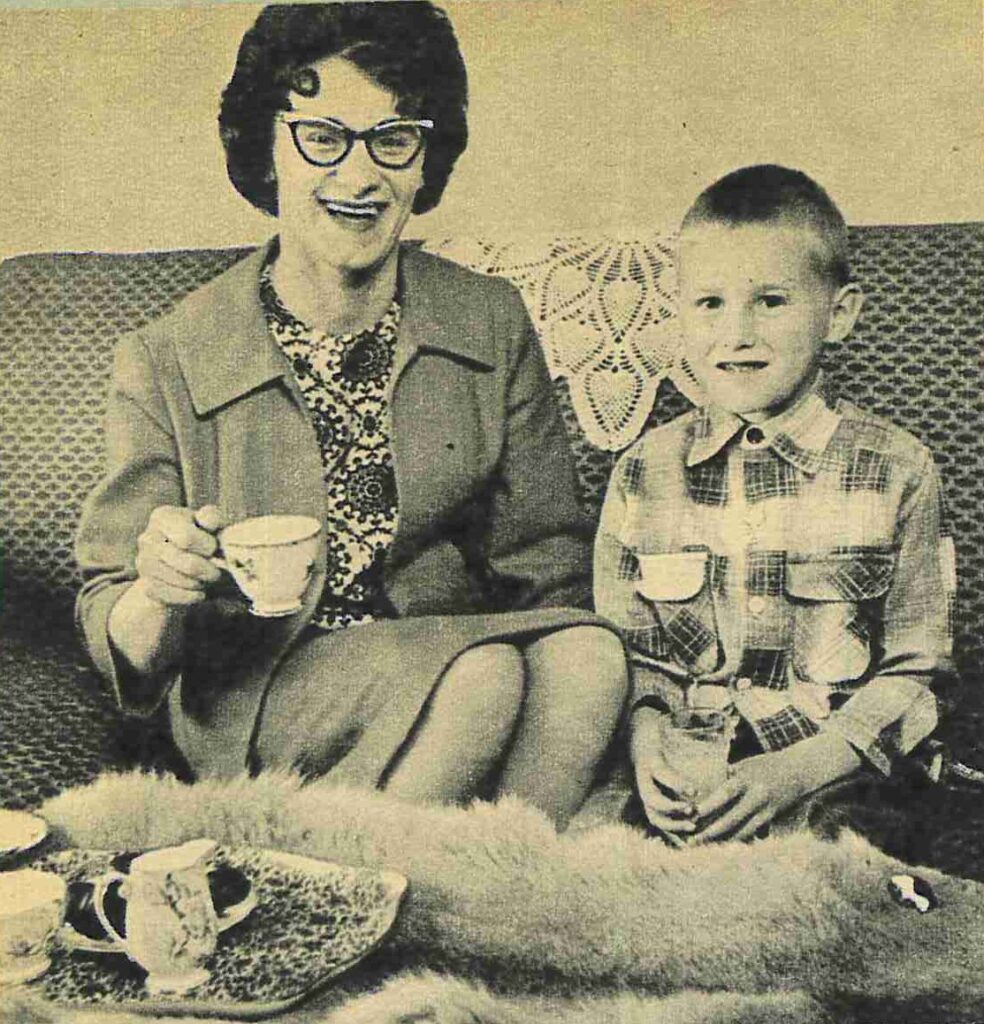
On the cool, dry afternoon of March 16, 1962, 6-year-old Brian R. Kilbreath was playing with friends in the woods near their homes in Hinton, Alberta, on the eastern slopes of the Canadian Rockies.
As they moved deeper into the brush, a young cougar leapt from a tree and landed on Brian’s chest, knocking him onto his back. Brian screamed as he tried to fight the animal. The cougar dug its claws into his chest and abdomen and bit into his neck, growling savagely.
The other boys fled, two of them running to the nearby home of 28-year-old Elsie H. McEvoy, a mother who was recovering from recent surgery.
McEvoy later recounted the attack to reporter Frances McNab for the September 1962 issue of Weekend Magazine.
She told McNab that she heard a “wild” pounding on her door. When she opened it, she found the frantic boys, who told her that a wild animal was eating Brian.
“They screamed out about the bobcat and bolted without another word,” McEvoy said. “Suddenly their sobbing sank in, and I realized it was no joke.”
At first, McEvoy thought they meant her own son, also named Brian, but she soon found him safe nearby. Hearing screams and growls from the brush, McEvoy told her son to take the other two boys home and call the police. Determined to help Brian, she continued toward the sounds of the attack.
McEvoy was in poor health and became badly winded as she ran across the road. Pressing on, she picked up a 5-foot-long dead branch and approached the scene.
“As soon as I rounded the corner of the house, I could see the terrible scene across in the woods—a snarling animal on top of a small boy in a snowsuit,” she said.
McEvoy soon realized that the animal gnawing on the 6-year-old’s neck was not a bobcat, as she had initially thought, but an emaciated—and therefore hungry—cougar.
She shouted, hoping to frighten it away, but the cougar only growled back.
“What I saw was too horrible: the animal really was trying to eat him,” she recalled. “Up close it was a sickening sight.”
Holding the branch in both hands, McEvoy repeatedly struck the cougar on the head. Part of the branch broke off with each blow, gradually making it less effective. The animal turned its head toward her, growled menacingly, and then resumed its attack.
McEvoy continued striking the cougar, even after the branch had been reduced to a piece only 15 inches long.
“It wouldn’t budge,” she said.
McEvoy bent over the cougar and grabbed the back of its head with one hand.
“Though I managed to raise its head, it still wouldn’t let go, and Brian’s bloody little face rose with the animal’s…I’ll never forget those eyes, the way they shone like two green fires with black slits in the centers,” she said.
McEvoy again raised the remaining piece of the branch and delivered a sharp blow to the cougar’s nose.
“One hard sharp crack right above the end of its nose did it. The head went limp and it rolled to one side.”
With Brian free from the cougar’s jaws, McEvoy dropped the branch, lifted the boy from the ground, and started running toward the road. She stumbled and fell to her knees but managed to keep hold of him. As she got back to her feet, she glanced behind her and saw that the cougar had risen.
“I was so terrified the cougar would revive and jump on my back that I looked behind. Just then it flopped over a little…Fortunately I fell on my knees and managed to keep from dropping Brian. Torn as he was, that would have been absolutely dreadful,” she recalled.
McEvoy feared that Brian might succumb to his grievous injuries.
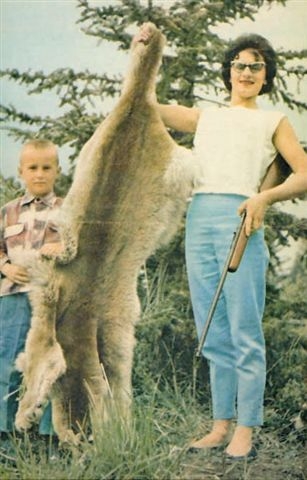
At the road, she was met by a group of neighbors, including Brian’s mother. McEvoy handed the boy to them and flagged down a passing car, which took him to the hospital.
She later led several armed neighbors back to the scene. The cougar lay quietly nearby. McEvoy borrowed a rifle and fired at it, after which the others also fired, killing the animal.
An examination later confirmed that the cougar was not rabid. Its skull had been fractured by McEvoy’s blows. The severely malnourished animal weighed only 35 pounds—about one-third the weight of an average 1-year-old cougar—which likely explained why it had ventured so close to town and attacked Brian.
Brian remained hospitalized for two weeks and required nearly 150 sutures for wounds to his face, neck, chest, abdomen, leg, and hand. He recovered, although his physician said that he had narrowly escaped death from severe blood loss.
“If Mrs. McEvoy had delayed to run for help and reached Brian one or two minutes later, the wounds would have been much, much more serious, and far more difficult to patch,” Dr. Ian C. Reid told McNab.
McEvoy was given sedatives and recovered overnight, having suffered only scratches in her fall. Although her physical injuries were minor compared with Brian’s, the attack left her shaken. Even the view of the woods from her kitchen window became a reminder of what she had witnessed.
“It was the reason we bought the house. But now I see it enough in nightmares. I hear Brian’s screams then, too, although I can’t recall hearing them.”
McEvoy received letters of commendation from many prominent figures, including Canadian Prime Minister John Diefenbaker and former U.S. Vice President Richard Nixon.
The Carnegie Hero Fund awarded McEvoy a silver Carnegie Medal and $750. Only 617 silver medals were issued by the Hero Fund.
The attention did not change McEvoy’s priorities, which remained centered on her family. The rescue did, however, create a lasting connection between her and the boy she had saved.
“My children mean just as much as ever, but there is a strange bond between Brian and me,” she said. “He often comes over to just sit while I clean or cook.”
— Griffin Erdely, Communications Assistant