

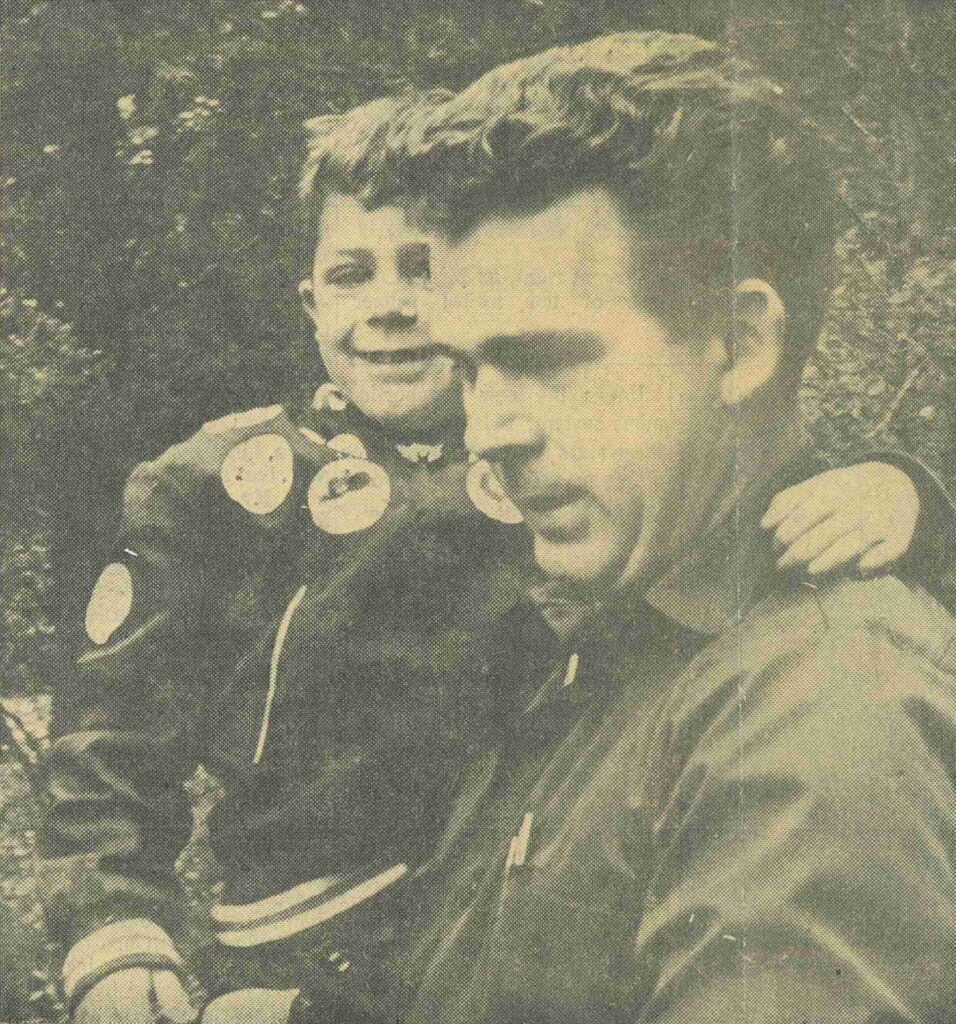
It was about 8:15 in the morning on May 25, 1966, when 6-year-old Michael S. Albee and other students were at a school bus stop in Burlington, Connecticut, when a 33-year old man in a pickup truck stopped near them.
The man had been reported to the police in the past for disorderly conduct and was known locally to be an excessive drinker. He approached the group of children and attempted to grab two girls, but they eluded him. He then turned his attention to Michael and forced him into the truck.
“He couldn’t get them, so he grabbed me around my stomach,” Michael later told William Borders in the 1966 edition of the New York Times. “I kicked him and tried to stop him, but he threw me in the truck anyway.”
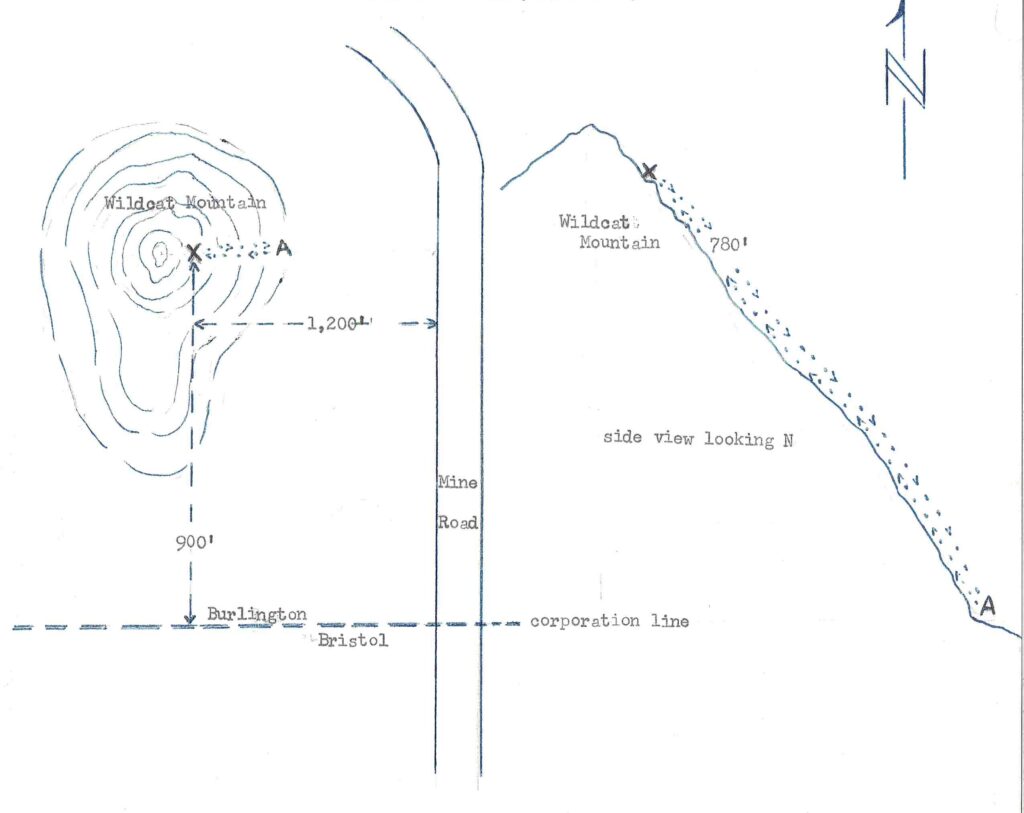
The man sped away while keeping hold of Michael as the boy continued to flail wildly. Two men in a vehicle saw the situation and followed the truck while some of the other children ran to a nearby dwelling and notified the police. The abductor drove 6 miles to his home at the foot of nearby Wildcat Mountain and took Michael into the house. The two men following them parked their vehicle in front of the house’s driveway to block the man from leaving the scene by vehicle.
Inside his house, the abductor obtained two loaded single-shot shotguns and 30 to 40 live shells.
“First he took me to his house — I didn’t know where we were,” Michael said to Nancy Mirto in the 1966 edition of The Bristol Press. “We went in and he got two guns and some bullets.”
The abductor then left the house on foot with Michael while swearing wildly and leading the boy up the hill. Above the base of the hill, the abductor and Michael reached a ledge where the man had earlier constructed a semicircular fortification of rocks at the edge of the ledge that was about 7 feet long and 4 feet high.
Within about 20 minutes, at least 25 policemen had arrived at the scene.
From the edge of a wooded section at the foot of the hill, officers saw the abductor behind the barricade and shouted to him that they would not harm him if he released the boy. The man refused, believing that he would be shot.
“Go away or I’ll kill the boy,” the abductor repeatedly shouted.
The police chief pleaded with the abductor for 45 minutes as a police sergeant made his way up the south side of the hill. The sergeant hoped to reach the abductor and Michael from above as he was distracted.
During that time, the abductor became increasingly disturbed and shouted that he feared the National Guard would kill him. There were no members of the National Guards present.
“He kept shouting that the National Guard was after him, and that he needed the kid for a hostage, but that doesn’t make sense,” the Bristol, Connecticut, Police Chief Robert Grace told the New York Times.
The abductor’s sister had then arrived at the scene where she then asked the police to permit her to go to her brother and join the pleas to release Michael. A policeman volunteered to go with the woman and they continually talked with the abductor in order to placate him while they approached.
Meanwhile, nearly two hours after police arrived, 31-year-old Bristol dog warden Wilfred E. Morin heard about the kidnapping on the police radio in his vehicle.
Morin rushed to help and reached the scene when he noticed Michael’s abductor leaning forward over the edge of the barricade with a shotgun. The police chief shouted for the sister and the accompanying policeman to drop to the ground when they were about 300 feet from the ledge.
The woman dropped to the ground, rolled down the hill, and returned to the woods. It was then that the abductor fired at the policeman, shot pellets striking his arm, shoulder, and face. He stumbled back down the hill and was taken to a hospital.
Morin was a part-time bartender and knew the abductor casually from having talked with him at the tavern where he worked. Concerned for the safety of Michael, Morin felt he might be able to persuade the man to release the boy to him.
“I could visualize one of my own kids up there,” Morin told Jim Petersen in the 1966 edition of the The Bristol Press.
The father of three got permission from a police captain, who had taken over for the police chief, to talk to the abductor.
Morin shouted to the abductor and identified himself on a first-name basis. The two men talked for about five minutes when the man said to Morin he would like a drink of water. Morin offered to bring him water if he would release Michael, and the man agreed to do so.
The police captain felt it was unwise for Morin to approach, fearing he would be shot as the policeman had been. Morin pleaded with the captain, stating he was willing to risk his life to make sure Michael would be released and the captain agreed to it. Morin urged the captain not to shout or for the police to take any action that might irritate the man.
Meanwhile, a radio call had brought additional police to the area and, unbeknownst to Morin, some had started up the west side of the hill to proceed over the top above the abductor. He continued his conversation with the man while he was getting the bottle of water and then proceeded slowly up the hill.
The abductor then shouted to Morin that he had changed his mind and would not give up Michael. He continued to fear that the National Guard would shoot him since he had shot a policeman.
The police captain then called to Morin not to go any farther and Morin feared that the man might start shooting at him. He dropped to the ground behind a tree, but after a few minutes felt that the abductor had calmed and proceeded up the hill.
He called to the abductor that he had no weapons and that there were no police with him. Morin was able to see through a clearing in the brush and lifted the water bottle to show the abductor, who then peered over the barricade with the shotgun aimed at Morin.
Morin continued to go behind the barricade as the abductor took the water and placed the shotgun against a rock. As he drank some of the water, Morin saw Michael sitting calmly about 3 feet away.
“He was as cool as a cucumber,” Morin said.
Morin considered attempting to grab the shotgun, but noticed the other weapon and feared he could not obtain both guns. He decided not to risk it so as to not put Michael in harm’s way.
He continued to talk with the abductor and told him it would be to his advantage to surrender, which the man refused. Morin reminded him that he had promised to release Michael. The abductor then told Morin to take the boy, saying he would not harm them.
About five minutes had elapsed since Morin reached the barricade and the police captain feared that Morin had also been taken hostage. Morin picked up Michael and told the man that he appreciated that he kept his word. As Morin left the fortification with Michael, the abductor crouched behind the barricade with his gun aimed below.
Fearing that some policeman might disturb the man and cause him to fire, Morin tried to remain calm but was nervous as he moved down the hill with Michael. On his descent, Morin slipped several times but did not fall.
It took about three minutes to reach the wooded area at the base of the hill where a nervous and shaking Morin informed the police captain that the abductor had two weapons.
The man again was urged to surrender but he refused. He put his shotgun aside and began adding stones atop the barricade.
The sergeant who climbed the hill earlier and another policeman on the hill above the ledge shouted to the man that he was covered, and in response, the abductor quickly picked up the shotgun to fire at the policemen. Both policemen would return fire, and fatally wounded the abductor.
Following the incident, Morin was still shaken, but patiently answered questions from newsmen about the events that had unfolded. Several police officers came up to him and praised him for his bravery, saying, “You did a good job, Willie.”
Young Michael told the New York Times that he was confident that he would return home.
“I knew I’d get back here,” the boy said. “I always come home. I prayed to God and then I wasn’t scared anymore.”
— Griffin Erdely, Communications Assistant